Reverb Types: What Actually Matters
A no-BS guide to reverb types from someone who's built them from scratch.
I've spent hundreds of hours staring at reverb algorithms. Building them, breaking them, wondering why my convolution engine sounds like garbage at 3am. So let me skip the Wikipedia summary and tell you what actually matters.
The Dirty Secret About Reverb Types
Here's what nobody tells you: most "plate" and "hall" reverbs in plugins are just the same algorithm with different decay times and EQ curves. The labels are marketing. A "plate" setting is usually just a brighter, denser algorithm. A "hall" is the same thing with a longer tail.
Real plates and halls sound different because of physics, not parameters. A plate is a literal vibrating sheet of metal. A hall is air bouncing off walls. When you simulate that in code, you're approximating—and the approximation often looks suspiciously similar across "types."
Does that mean the labels are useless? No. They're useful starting points. Just don't get religious about them.
What Actually Differentiates Reverbs
Forget the marketing names. Here's what actually changes how a reverb sounds:
Early reflections vs. tail: Some reverbs nail the first 50-100ms (the part that tells your brain "this is a room"). Others focus on the smooth decay. The best do both. Most don't.
Density: How many reflections per second. Sparse = you hear individual echoes. Dense = smooth wash. Neither is better. Drums often want sparse. Vocals want dense.
Modulation: Does the tail shimmer and move, or sit static? Modulated reverbs sound bigger and hide artifacts. Unmodulated sounds more "realistic" but can get metallic.
Diffusion: How quickly early reflections smear into the tail. High diffusion = smooth. Low diffusion = you hear the room's shape.
The Types, Honestly Explained
Room: Short decay, early reflections forward. Use it when you want something to sound like it was recorded in a space, not when you want an "effect." The goal is usually to not notice it.
Hall: Long decay, complex tail. The Hollywood blockbuster of reverbs. Use sparingly unless you're making trailer music or want everything to sound EPIC. Easy to overdo.
Plate: Bright, dense, unnatural in a good way. The classic vocal reverb because it adds size without adding "room." Sounds great on snare too. Roll off the lows or you'll get mud.
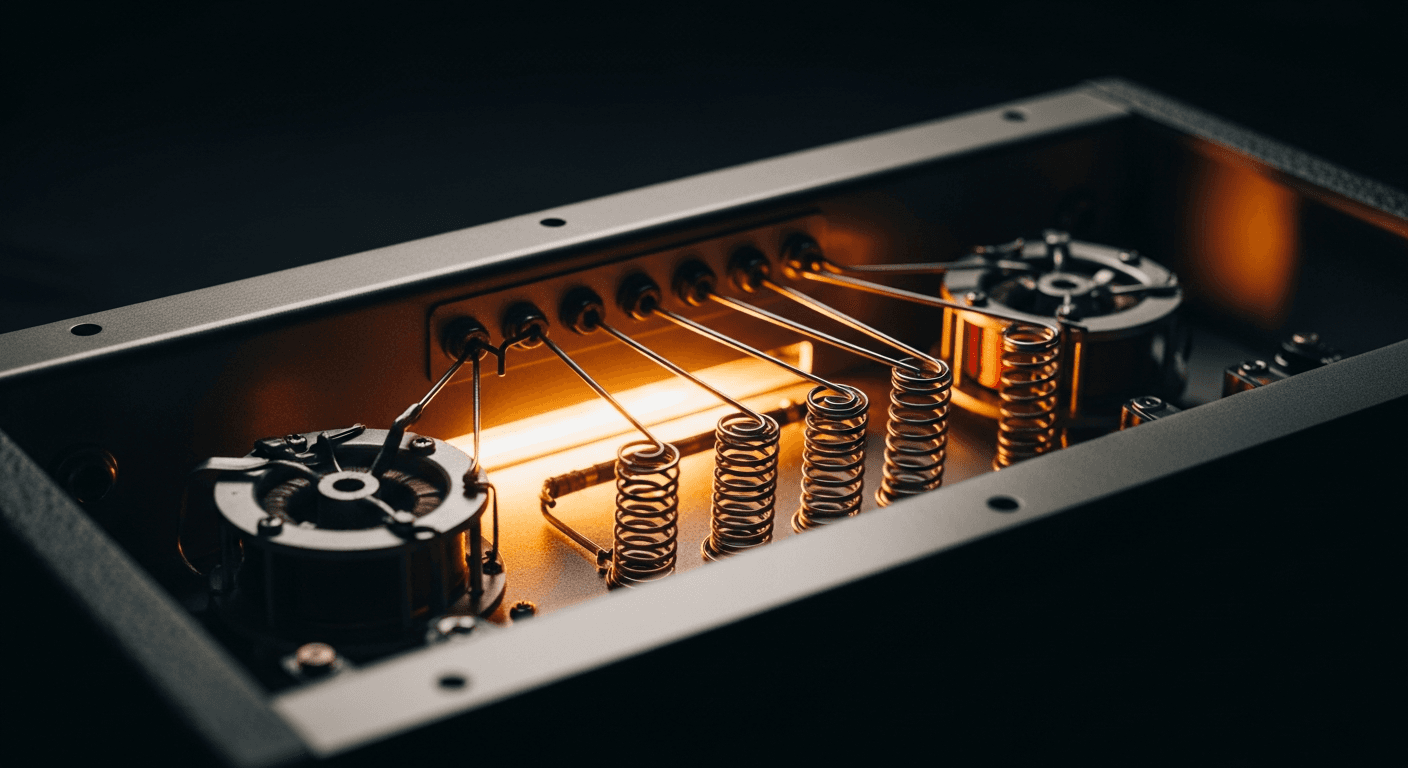
Spring: The "boing." Either you want that sound or you don't. Great for guitar, dub reggae, lo-fi anything. Terrible for "realistic" spaces.
Chamber: The forgotten middle child. Natural-ish but controlled. Worth exploring if halls are too big and rooms are too small.
Algorithmic vs. Convolution
Algorithmic: Math simulating reverb. Flexible, efficient, can create spaces that don't exist. This is what I build.
Convolution: Recorded impulse responses of real spaces. The "photograph" of a reverb. Sounds realistic but you can't tweak it much.
Hot take: convolution is overrated for mixing. It's great for film post when you need to match a specific location. For music? Algorithmic gives you control. And control is what you need when you're making decisions.
The Only Mixing Tips That Matter
Pre-delay is your friend. 20-40ms separates the dry signal from the verb. Keeps things clear. I use it on almost everything.
EQ the return. High-pass at 200-400Hz minimum. Low-pass if it's harsh. The reverb doesn't need to be full-range.
If you can hear it, it's probably too much. Reverb should be felt. Turn it up until you notice it, then back off.
Match the tempo. If the tail is still going when the next note hits, you're stepping on yourself. Faster songs = shorter verbs.
Solo the reverb return sometimes. You'll be horrified how much is actually there. Good reality check.
The Real Skill
The difference between amateur and pro reverb use isn't knowing which type to use. It's restraint. It's knowing when NOT to add reverb. It's realizing that the "perfect" reverb sound in solo makes your mix worse.
I've built reverb plugins. I've spent months tweaking algorithms. And my mixes got better when I started using less reverb, not more.
Use what sounds good. Ignore the labels when they don't help. Trust your ears over the preset name.
Related Articles
Analog Modeling: How Plugins Get That Sound
What actually happens inside analog-modeled plugins. The DSP behind harmonic distortion, transformers, and tube warmth.
How to Use Reference Tracks: The Pro Mixing Secret
Reference tracks are how professionals avoid mix blindness. Learn to use them effectively without losing your own sound.
Delay Settings for Vocals: From Subtle to Dramatic
How to use delay on vocals without creating a muddy mess. Practical settings for slap, tempo-sync, and throw delays.