Saturation: The Most Misunderstood Tool in Your DAW
Everyone uses saturation. Most people use it wrong. Here's what's actually happening and how to use it intentionally.
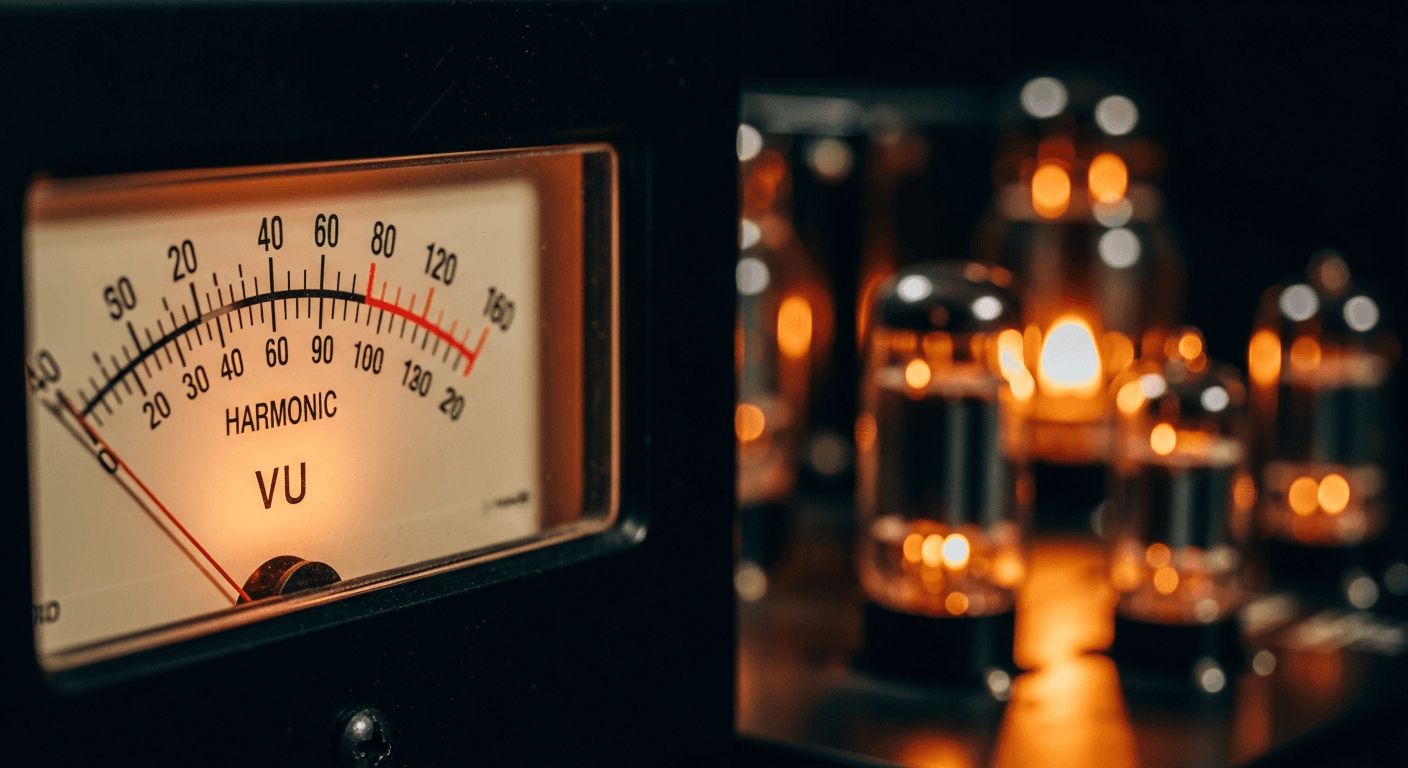
Saturation is everywhere. Every "vintage" preset, every "analog warmth" plugin, every YouTube mixing tutorial telling you to "just add some saturation for vibe."
But most people have no idea what saturation actually does. They just crank it until something sounds different and call it a day.
Let me explain what's actually happening.
What saturation is (for real)
Saturation is distortion. That's it. Controlled, musical distortion, but distortion nonetheless.
When you push a signal into a system harder than it can cleanly handle�whether that's tape, tubes, or code�the waveform gets squished. The peaks get rounded off or flattened. New frequencies appear that weren't in the original signal.
Those new frequencies are harmonics�integer multiples of your original frequencies. A 100Hz bass note gets 200Hz (2nd harmonic), 300Hz (3rd), 400Hz (4th), and so on added to it.
Different saturation types generate different harmonic profiles:
Even harmonics (2nd, 4th, 6th) sound "warm" and "musical." Tubes tend to produce these.
Odd harmonics (3rd, 5th, 7th) sound "edgy" or "aggressive." Transistors and tape tend toward these.
Real hardware produces both, in different ratios depending on how hard you push it. That ratio is what gives different gear its character.
Why people use it wrong
Here's the problem: saturation is addictive. It makes things louder (compression effect), brighter (harmonics add high-frequency content), and more "present" (distortion always cuts through a mix).
So people add it to everything. Then they add more. Then they wonder why their mix sounds harsh, muddy, or weirdly "small."
Harmonics stack. If you're adding saturation to your kick, snare, bass, vocals, and mix bus... you're generating harmonics of harmonics. The math gets ugly fast. Frequencies pile up, masking builds, and suddenly you've got a mess that no amount of EQ can fix.
How I actually use saturation
On individual sources: Very sparingly. If something sounds thin or lifeless, a touch of saturation can add body. But I'm talking barely-visible-on-the-meter amounts. If you can obviously hear the distortion, you've probably gone too far for most sources.
On the drum bus: This is where saturation shines. Drums benefit from the transient-rounding and "glue" that light saturation provides. I'll push it harder here�maybe enough to see a dB or two of gain reduction on the peaks.
On the mix bus: Almost never. Hot take: mix bus saturation is overrated. By the time you're at the mix bus, any saturation artifacts get amplified across everything. I'd rather get my harmonics at the source level and keep the mix bus clean.
Parallel: Often. Running a heavily saturated version in parallel with the clean signal gives you control. You get the harmonics and aggression without losing the transients and clarity of the original.
The types, briefly
Tape: Smooth compression, gentle high-frequency rolloff, primarily odd harmonics. Good for taming harsh digital sounds.
Tube: Can go from warm and subtle to aggressive, depending on how hard you push. More even harmonics at low drive, more odd as you push harder.
Transistor/solid-state: Harder clipping, more aggressive. Great for in-your-face sounds, less great for "warming up."
Digital hard clipping: Sounds terrible. This is what happens when you hit 0dBFS in your DAW. Avoid.
But honestly? The specific type matters less than how you use it. I've gotten great results from free stock saturators and disappointing results from expensive "vintage" plugins. It's not about the tool.
The real skill
Knowing when NOT to use saturation.
If your source sounds good, leave it alone. If your mix is clear and punchy, don't add saturation "just because." The best saturation move is often no saturation at all.
When I was starting out, I'd add saturation to everything. Now I use it on maybe 20% of the tracks in a mix, and usually subtly. The mixes got better when I got more selective.
Saturation is a powerful tool. Like all powerful tools, it requires restraint.
Use it when there's a problem it solves. Leave it alone when there isn't.
If you're looking for saturation that responds like real hardware, check out Ember EQ—it has tube-style saturation built into the EQ circuit that changes character based on how hard you push it. Or try DriveVerb for reverb with integrated saturation.
Related Articles
Analog Modeling: How Plugins Get That Sound
What actually happens inside analog-modeled plugins. The DSP behind harmonic distortion, transformers, and tube warmth.
How to Use Reference Tracks: The Pro Mixing Secret
Reference tracks are how professionals avoid mix blindness. Learn to use them effectively without losing your own sound.
Delay Settings for Vocals: From Subtle to Dramatic
How to use delay on vocals without creating a muddy mess. Practical settings for slap, tempo-sync, and throw delays.