Free vs Paid Plugins: When to Spend Money (Honestly)
A plugin developer's honest take on when free plugins are enough and when it's worth paying.
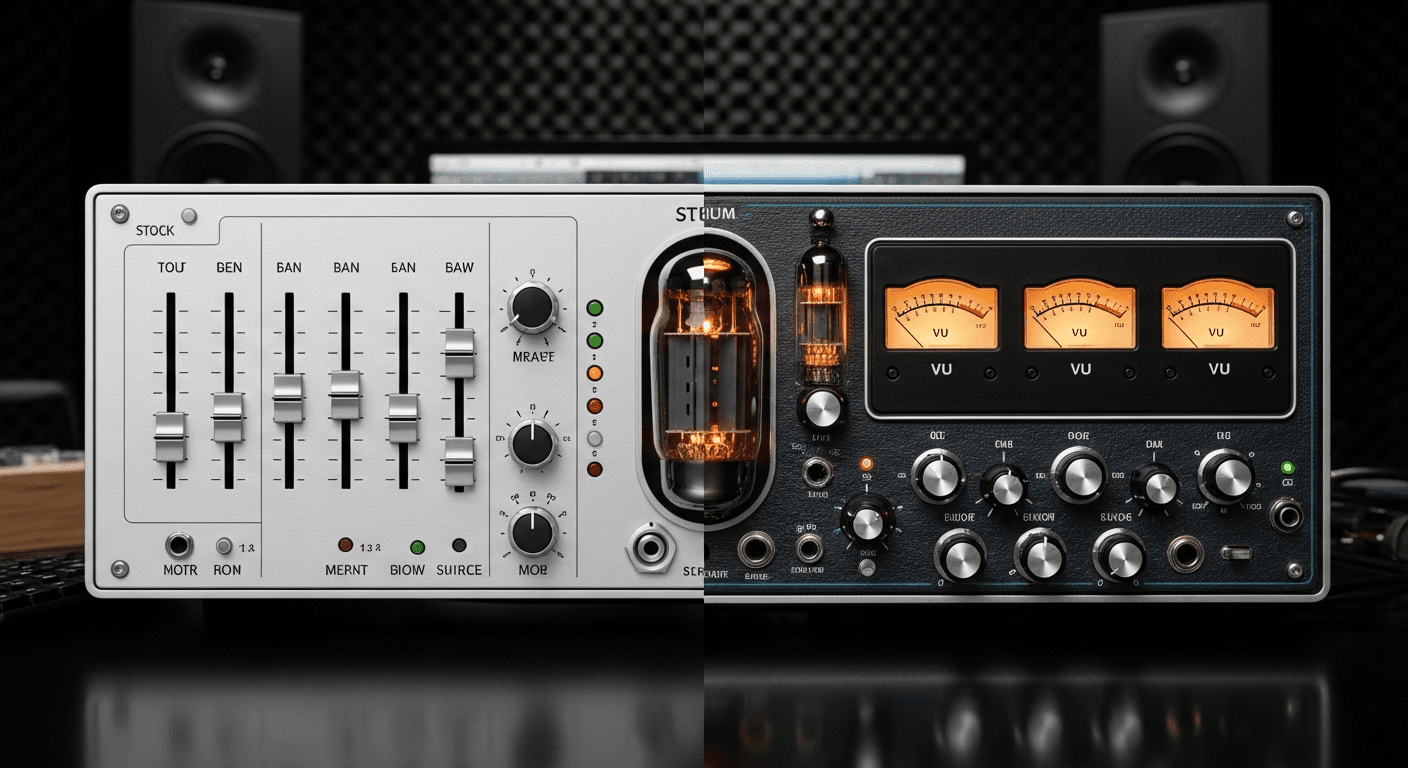
I make plugins and sell them. So you'd expect me to say "always buy premium plugins."
I'm not going to say that.
Here's my honest take on when free plugins are fine, when paid plugins are worth it, and when you're just wasting money.
When Free Plugins Are Enough
Stock DAW Plugins
Your DAW came with an EQ, compressor, reverb, and delay. These are probably fine.
Seriously. Ableton's stock EQ is clean and flexible. Logic's compressors are solid. FL Studio's effects are usable. For 90% of mixing tasks, they work.
I've heard great mixes done entirely with stock plugins. The plugins didn't make them great—the mixing decisions did.
Utility Stuff
Gain plugins, meters, analyzers, simple EQs for problem-solving—free is fine. There's no "character" needed. They just need to work.
Learning
If you're still learning to mix, spend money on education, not plugins. You don't need a $200 compressor to learn compression. You need to understand what compression does.
Free plugins that teach you the fundamentals are more valuable than expensive plugins you don't understand.
When Paid Plugins Are Worth It
Character and Color
This is where paid plugins actually matter.
A modeled tube EQ doesn't just EQ—it adds harmonic complexity, subtle saturation, a specific frequency response curve. That character is the value.
Stock plugins are transparent. That's their strength AND limitation. Sometimes you want color.
When I built the Ember EQ, months went into the saturation modeling—how the harmonics respond to level, how the frequencies interact. That's not "better EQ." It's a different tool that does something stock plugins can't.
Workflow and Inspiration
Some plugins are worth it because they change how you work.
A great synth inspires sounds you wouldn't make otherwise. A well-designed interface makes mixing faster. A plugin that sounds good immediately keeps you in flow instead of fighting with settings.
Time is valuable. If a $40 plugin saves you an hour per session, it pays for itself fast.
Reliability and Support
Paid plugins from reputable developers are tested, updated for new OS versions, and supported when things break.
Free plugins can disappear. The developer moves on, stops updating, and suddenly your projects won't open because the plugin doesn't work on the new macOS.
I've seen this happen. That "free" plugin cost hours of troubleshooting and project recovery.
When You're Wasting Money
Buying Before Learning
Don't buy a mastering suite when you can't explain what a limiter does. You'll just have expensive tools you don't understand.
Chasing the Sound of Pros
That mixer's sound comes from decades of experience, not the $500 EQ. You can buy their exact chain and still sound like you.
Plugin Hoarding
If you have 50 compressors and use 3 of them, you don't need more compressors. You need to actually learn the ones you have.
Replacing Skill with Gear
No plugin fixes bad recordings, bad arrangements, or bad decisions. If your mix is mud, a new reverb won't help.
My Honest Recommendation
If you're starting out: Use stock plugins. Learn what they do. Make 50 mixes. Then decide what's missing.
If you know what you're doing: Buy plugins that fill specific gaps in your workflow. Color you can't get from stock. Workflow improvements. Sounds that inspire you.
If you want to support indie developers: Hi, that's me. Small developers make unique stuff that big companies don't. Throwing $30 at something that looks cool and supporting an indie is valid.
The Price Thing
I price my plugins at impulse-buy levels—$30-40. Here's why:
At that price, you don't need to agonize over the decision. If it works for you, great. If it doesn't, you didn't mortgage your house.
Plugins shouldn't cost as much as hardware that required physical manufacturing, global supply chains, and quality control. We're copying bits. The value is in the sound and the workflow, not artificial scarcity.
Bottom Line
Free plugins are often enough. Paid plugins add value through character, workflow, and reliability—not magic.
Know what you need. Buy that. Skip the rest.
Related Articles
Analog Modeling: How Plugins Get That Sound
What actually happens inside analog-modeled plugins. The DSP behind harmonic distortion, transformers, and tube warmth.
Best EQ Plugins for Mixing: What Actually Matters
A no-BS, opinionated breakdown of the best EQ plugins for mixing—what types matter, which ones are industry standards, and when free EQs are more than enough.
Mixing Mistakes I Made (So You Don't Have To)
The dumb stuff I did for years before figuring out what actually matters.