Best EQ Plugins for Mixing: What Actually Matters
A no-BS, opinionated breakdown of the best EQ plugins for mixing—what types matter, which ones are industry standards, and when free EQs are more than enough.
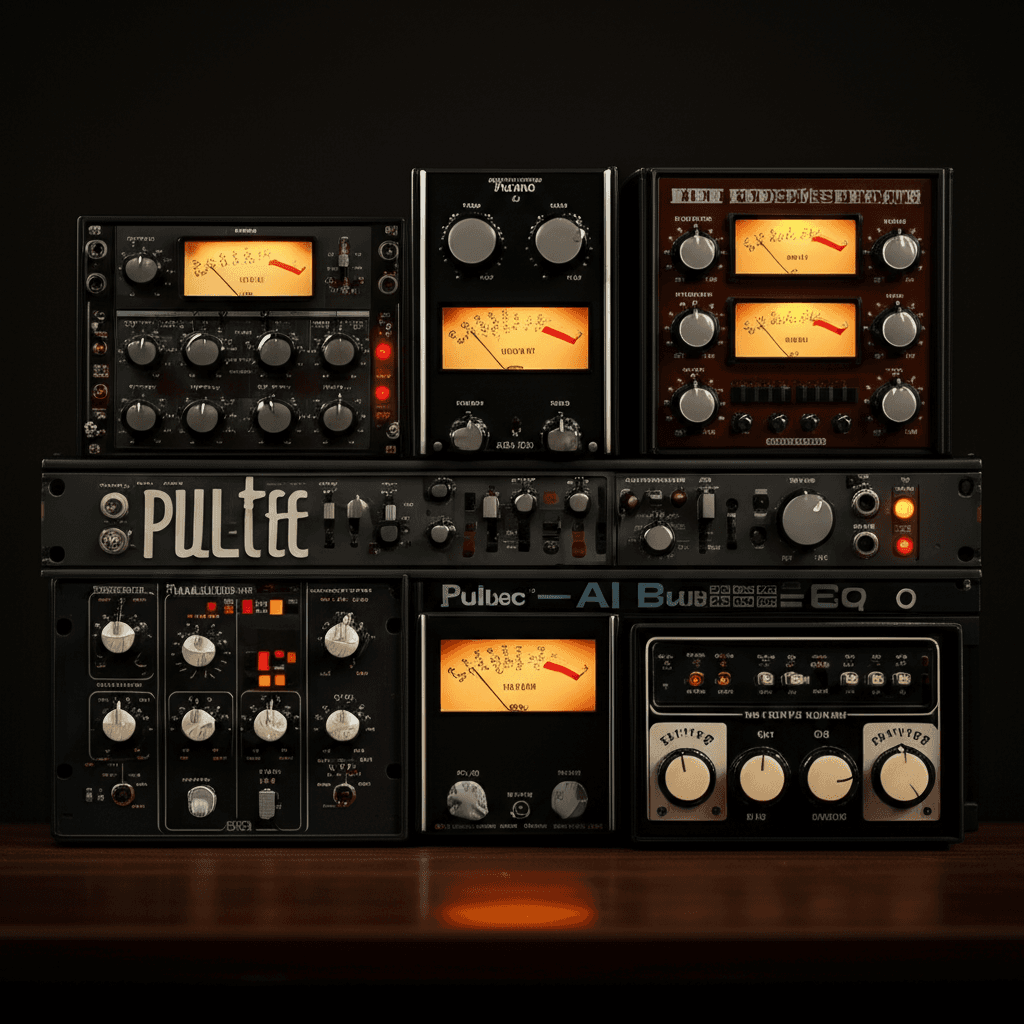
EQ is the most important mixing tool. Full stop.
Compressors get the glory. Saturation plugins get the hype. New AI-powered nonsense gets the headlines. But if your EQ decisions suck, your mix sucks—no matter what else you do.
I've mixed long enough to be allergic to marketing claims, and I've tested more EQ plugins than I care to admit. This article is my honest take on the best EQ plugins for mixing, what types actually matter, and when you should stop chasing gear and start fixing your ears.
This is opinionated. It's practical. And it's not sponsored by anyone who's afraid of criticism.
What Makes a Good EQ Plugin (Before We Name Names)
Let's get this out of the way: most modern EQs are technically "good enough." The differences that matter are workflow, behavior under stress, and whether the plugin lies to you.
Here's what I actually care about in an EQ VST:
- Predictable curves – What you hear should match what you see.
- Clean gain staging – No mystery saturation unless I ask for it.
- Surgical control when needed – Narrow Q that doesn't collapse.
- Musical broad strokes – Gentle curves that don't feel brittle.
- Low CPU + zero drama – EQ should not be the thing crashing my session.
- Trust – I need to stop thinking about the plugin and focus on the sound.
Everything else—oversampling badges, vintage GUI skeuomorphism, "AI suggestions"—is secondary at best, harmful at worst.
Types of EQ Plugins (And When Each One Matters)
If you don't understand which type of EQ to use, arguing about the "best EQ plugin" is pointless. Different jobs require different tools.
Parametric EQ
Your daily driver. Transparent, flexible, fast.
Use it for:
- Cleaning up mud
- Shaping tone
- Making space between instruments
- 90% of all EQ moves in a mix
If you only owned one EQ, it should be a good parametric EQ.
Analog-Modeled EQ
These are about color and vibe, not precision.
Use them for:
- Broad tone shaping
- Adding density or attitude
- Musical boosts (especially highs and lows)
They lie. That's the point.
Linear Phase EQ
A specialized tool that people misuse constantly.
Use it for:
- Parallel processing
- Mastering (sometimes)
- Situations where phase shift is genuinely audible
Do not slap this on every track "because mastering engineers use it."
Dynamic EQ
One of the most powerful and misunderstood tools in mixing.
Use it for:
- Taming harshness only when it appears
- De-essing without killing air
- Low-end control that still breathes
If you're still doing static EQ cuts for dynamic problems, you're working harder than necessary.
Best Parametric EQ Plugins (The Real Workhorses)
FabFilter Pro-Q 3
Yes, it's obvious. Yes, it's still the standard.
Why it wins:
- Incredible UI
- Dynamic EQ per band
- Mid/side done right
- Fast, intuitive workflow
It's not exciting. It's not vibey. It just works—and that's why it's everywhere.
If someone tells you they don't like Pro-Q, they're either contrarian or lying.
Ember EQ (Malinow Audio)
I'll be transparent: this is my EQ. And I built it specifically because I was tired of EQs that either added hidden color or got in my way.
What Ember EQ is for:
- Precise, honest tone shaping
- Mix decisions you can trust
- Zero hype, zero mystery behavior
Ember EQ doesn't try to sound "analog." It doesn't flatter bad decisions. It shows you exactly what you're doing—cleanly, predictably, and without CPU nonsense.
If you want an EQ that gets out of the way and lets you do the work, this is it.
DMG Audio EQuilibrium
The nerd's EQ—in the best way.
Incredible depth, customizable curves, and surgical precision. The downside? The UI feels like it was designed by an engineer who hates designers.
Still, sonically excellent.
Best Analog-Modeled EQ Plugins (For Tone, Not Surgery)
Pultec-Style EQs (UAD, Waves, Acustica)
Boost and attenuate at the same time. Make low end feel bigger without getting louder. Magic? No. Physics and phase interaction.
These are unbeatable for:
- Kick and bass
- Vocal air
- Broad shaping on buses
Just don't pretend they're transparent—they're not.
API 550 / 560 Style EQs
Aggressive. Forward. Midrange punch machines.
Great for:
- Drums
- Guitars
- Anything that needs attitude
They force commitment. That's a good thing.
SSL Channel EQs
Clean-ish, fast, and musical.
Perfect for:
- Channel strips
- Workflow mixing
- Engineers who grew up on consoles
Not exciting, but extremely effective.
Best Linear Phase EQ Plugins (Use Sparingly)
FabFilter Pro-Q 3 (Linear Phase Mode)
This is honestly enough for most people.
Yes, it introduces latency. Yes, it can smear transients if abused. But for occasional problem-solving or mastering tasks, it's solid.
iZotope Ozone EQ
Part of a larger ecosystem, but the linear phase mode is clean and reliable.
Just remember: linear phase is not "better," it's different. Use it when phase coherence matters more than punch.
Best Dynamic EQ Plugins (The Real Secret Weapon)
FabFilter Pro-Q 3 (Again)
Dynamic bands per node. Simple. Effective. Hard to beat.
TDR Nova
Free. Ridiculously good.
Nova handles:
- De-essing
- Harsh resonance control
- Dynamic low-end cleanup
If you're on a budget, this is a no-brainer.
oeksound Soothe2 (Yes, It Counts)
It's not a traditional EQ, but it solves EQ problems dynamically in a way nothing else does.
Use sparingly. Overuse it and your mix will sound like wet cardboard.
Best Free EQ Plugins (When Free Is Enough)
Here's the truth: you can make professional mixes with free EQs.
Seriously.
TDR Nova
Dynamic EQ, clean sound, great UI. Insane value.
ReaEQ (Reaper)
Ugly. Effective. Zero nonsense.
MEqualizer (Melda)
Clean and flexible, if you can tolerate the interface.
If you're blaming your EQ plugin for bad mixes, stop. The problem isn't the tool.
Paid vs Free EQ: When Should You Upgrade?
Upgrade when:
- You need speed
- You want better visualization
- You rely heavily on dynamic EQ
- Workflow matters more than theory
Don't upgrade because:
- A YouTuber told you to
- The GUI looks "analog"
- You think it'll fix your low-end
Better EQ plugins don't make better decisions. They just make decisions faster.
The Biggest EQ Plugin Myths (That Need to Die)
"Analog EQs sound warmer"
Sometimes. Often they just distort slightly and roll off highs. That can be good—but it's not magic.
"You need linear phase for mastering"
No. You need good ears and restraint.
"More bands = more control"
More bands usually mean more ways to mess things up.
"AI EQ will mix for you"
Absolutely not. At best, it gives you a starting point. At worst, it trains you to stop listening.
My Actual EQ Plugin Recommendations (No Waffling)
If I had to boil it down:
- Best overall EQ plugin: FabFilter Pro-Q 3
- Best transparent EQ: Ember EQ
- Best free EQ: TDR Nova
- Best analog vibe EQ: Pultec-style EQs
- Best dynamic EQ workflow: Pro-Q 3 or Nova
- Best "stop thinking and mix" EQ: Any good parametric you actually know
Pick one or two. Learn them deeply. Stop hoarding plugins.
Final Thoughts: The EQ Plugin Doesn't Matter As Much As You Think
EQ is about decisions, not tools.
The best EQ plugin is the one that:
- Lets you hear problems clearly
- Gets out of your way
- Doesn't lie to you
Whether that's Pro-Q, Ember EQ, or a free stock plugin matters far less than how you use it.
If you focus less on chasing the "best EQ VST" and more on understanding why you're EQing at all, your mixes will improve faster than any plugin sale ever could.
That's not hype. That's just experience.
Related Articles
Analog Modeling: How Plugins Get That Sound
What actually happens inside analog-modeled plugins. The DSP behind harmonic distortion, transformers, and tube warmth.
How to Use Reference Tracks: The Pro Mixing Secret
Reference tracks are how professionals avoid mix blindness. Learn to use them effectively without losing your own sound.
Delay Settings for Vocals: From Subtle to Dramatic
How to use delay on vocals without creating a muddy mess. Practical settings for slap, tempo-sync, and throw delays.